Beyond Demographics, We Need Diversity of Thought

We are at risk of becoming incapable of seeing beyond our own reflection and opinions.

Diversity is a catchword, not a cause, whenever differences of appearance outweigh different opinions. So long as we reduce our differences to matters of color — of not just black and white but brown, red, and yellow, too — so long as we mistake beauty for brains, so long as diversity is superficial and dissent is tantamount to sedition, we will not be true to the spirit of America.

If diversity is a synonym for inclusion, we have much to celebrate. We have more women and people of color in positions of power than previous generations could imagine. We have more people of different faiths, or no religious faith, in business, politics, and civic life. We have more married couples — of the same sex — than seemed possible a decade ago, than seemed probable five years ago. We have a former president whose name alone sounds foreign to many of our citizens, while his life story is familiar to tens of millions of Americans.

And yet, neither biology nor biography is a guarantee of the diversity we seek. Not when one is inflexible and the other is a narrative with an inflexible theme of sameness: a tale of more than two cities, but a nonetheless predictable plot with a trite ending.

Where does this version of diversity end? In a word: boredom. For boredom breeds ignorance and complacency in which we fail to realize how shallow diversity is when it is only skin deep; when it is presumptuous to believe — and sometimes racist to assert — that we should coordinate our lives according to our respective colors, as if there is no room for shades of beige, almond, chestnut, chocolate, sienna, honey, sand, or gray.

Diversity of thought, on the other hand, is more multifaceted than monochromatic. We can maintain the mosaic, so to speak, without diluting its artistry or dimming its allure. We can make it brighter by infusing it with enlightened minds, rather than better lighting, because each person is a point of light: a source of revelation about the arc of a single life, which is a universe unto itself; of different experiences and divergent encounters; of markedly different viewpoints about the same vista.

We should encourage these differences, not dismiss them, because we otherwise risk relegating diversity to the realm of cosmetics. We risk becoming the worst sort of narcissists: incapable of seeing — and unwilling to even try to see — beyond our own reflection and opinions, lest we avert our gaze and turn our attention elsewhere; to the men and women of the town hall meeting; to the citizens meeting in line — to vote or volunteer — so they may answer the call of their community before asking a thing of their country.

Above all, let’s be civil in our engagement.

Let us look to engage each other, rather than merging different looks with different outlooks. Above all, let’s be civil in our engagement.

One is easy to spot, while the other is hard to find unless you focus on what you need to hear: not the voices of agreement but the vociferous opponents of comity over conscience, of conformity over courage, of consensus over concern for life, liberty, and the pursuit of happiness.

Diversity is, therefore, more complex than we may care to admit; but admit it we must, because we cannot form a more perfect union until we invite a critique of our own imperfections.

We can be a better country, provided our definition of diversity is as expansive as America itself.

Diversity abounds in this land of plenty.

Let us cultivate it.

Let us consecrate it.

Let us promise to protect it, now and forevermore.


Elizabeth Rice Grossman

Kailua, HI

Previously published by Civil Beat 11.30.18
Click Here


www.civilbeat.org


Beyond Demographics, We Need Diversity of Thought

Bye Bye Facebook!

Goodbye to Facebook and Mark Zuckerberg. Goodbye to the site’s scroll-and-sign Statement of Rights and Responsibilities, which is as worthless as the nonexistent paper it is printed on; which dissolves into the ether of this so-called community of friends, but does not altogether disappear; which is less an expression of individual rights than it is the surrender of our collective right to privacy; which allows Facebook to exercise its right to collect and monetize our data; which is the means to the end of truth in advertising and truthfulness in general; which is an end unto itself, provided it enriches Mark Zuckerberg, regardless of its cost to liberty and justice for all.

Goodbye to all that, because I refuse to be an accessory after the fact. I refuse to knowingly abet a CEO who is neither accountable to his board of directors nor compelled, under oath, to offer a full—and true—account of Facebook’s acts of commission and omission against its users. I refuse to accept a lesser standard of responsibility for billionaires, compared to the standards that govern billions of everyday citizens worldwide. I refuse to have the U.S. Congress plead with Mark Zuckerberg to testify on Capitol Hill, when it subpoenas other Americans to swear to tell the truth, the whole truth, and nothing but truth—so help them God.

It is this exception to the rule, which exempts Mark Zuckerberg from the rules. How many Americans, after all, get to set the terms of their testimony before Congress? How many people get to entertain the possibility of testifying under oath, when the alternative is a citation for contempt and court-imposed sanctions? How many people do you know have the audacity to showcase their contempt for Congress by not-so-subtly putting on a show? By show, I mean the drone-like demeanor of Mr. Zuckerberg, in which he has a surplus of answers but a deficit of emotions.

How else to explain his words of contrition, but his visible lack of remorse? The question is rhetorical, because Mark Zuckerberg strikes me as more ruthless than regretful. If he has any regrets, they may have more to do with what the public now knows than what he wants users to not even suspect—which is nothing.

I am the one who is sorry. I am sorry that Mark Zuckerberg respects my rights less than I do his. I am sorry that I find it impossible to believe what he said, because there is no possibility someone at Facebook did not try to warn the company about its poor protection of personal data.

I am sorry that Mark Zuckerberg believes the best way to solve something he hates is to ban it. I am sorry that he wants to restrict what he cannot define; that he finds what is constitutional in the real world to be impermissible in his; that he thinks computers will soon be smart enough to spot—and fast enough to erase—whatever it is that he calls “hate speech”; that he trusts the artificial intelligence of machines over the wisdom of men and women.

And yet, I know that actions matter more than words. These are my parting words to Facebook, as I have no need to part with more of my personal data. I have no need for Facebook’s propensity for distraction and distortion. I have no need for this platform, period.

I will focus my attention, instead, on doing what I can to support my community, my family, and my country.

Goodbye Facebook, I wish I could say it’s been real.


Elizabeth Rice Grossman

San Francisco, CA


Bye Bye Facebook!

Exhausting Philanthropists Through “Donor Fatigue”

Exhausting Philanthropists Through ‘Donor Fatigue’


No society can achieve greatness without the goodness of philanthropists. But no society can stay great if it exhausts its most important philanthropists, draining them emotionally and depleting them economically, until there is nothing left for them to give and no reason for them to give anyone anything. Welcome, in other words, to donor fatigue: a very real phenomenon—as troublesome to the health of democracy as it is a threat to philanthropy in general—where we make those who are rich in goods feel ragged in spirit; where too many ask too often for too much; where the few, who give so much to so many, can no longer afford to give even a little; where altruism atrophies into apathy; where democracy dies not in secret, but in public, because of the public’s barrage of requests to philanthropists.

This is no letter of complaint. Nor is it an expression of regret, not when I have had the chance—and continue to seize every chance I have to give as much as I can—to better the lives of children, students, burn survivors, and stewards of the environment. What I mean to say, instead, is that technology makes it too easy to contact philanthropists; and social media makes it even easier to ostracize philanthropists—to transform them into social lepers—if they do not answer every plea with a pledge; if they do not reply to every email more expeditiously than is humanly possible; if they do not convert themselves into cash machines, lest the machines of technology—including Facebook and Twitter—turn against them with erroneous posts and egregious tweets that attack their character.

My plea, then, is for more individuals and institutions to exercise restraint. Let them police themselves, so they may be more selective about when—and for what reasons—they issue an appeal to donors. Let everyone know that there are only so many hours in a day for a philanthropist to balance public wants with private needs; that those who give, and I wish I could give more, also have responsibilities as husbands and wives, mothers and fathers, and sisters and brothers. Each of us has, or should have, a life with a room for oneself.

One need not be a philanthropist to experience donor fatigue. Ask a middle class couple what it is like to have a telemarketer interrupt their dinner, to have a stranger knock on their door, to have someone text them—to endure this simultaneous onslaught—without losing their cool or sacrificing their composure. Ask a business owner how many solicitations he receives, until he must hang a sign that forbids such behavior in his building or store.

Recognize, too, the difference between tiredness and fatigue. The former requires a good night’s sleep, while the latter all but demands many days and nights—whole months—of hibernation. Fatigue can be chronic, which is not conducive to helping society. Be mindful, therefore, of what a philanthropist can do.

We are no less immune to stress and anxiety than anyone else. We are no less prone to empathize with the ordeals of some and sympathize with the struggles of most. We want to help—and we do help—but there is a limit to how much we can help.

Help us work together, so we can maximize the power of philanthropy by making it more manageable for philanthropists to be philanthropic. Help us do our best, because society deserves nothing less than the excellence we possess and the possessions it is our right to donate for the betterment of our fellow Americans.

Donor Fatigue

Elizabeth Rice Grossman

2 March 2018

Kailua, HI


Exhausting Philanthropists Through “Donor Fatigue”

An Advertisement Against Advertising

big pharma

Watch enough TV news, and view enough commercials by Big Pharma, and you will see a doctor sooner than you expect.

You will schedule an exam – and undergo a series of tests – not because you are sick, but because you think you may be sick.

Between the symptoms drug makers list, which range from the minor to the very mundane, and their purported connection to some chronic or deadly (if untreated) disease, it is no wonder that a person with acid reflux – or dry skin or joint pain, or poor eyesight or even bad breath – will trade his clothes for a hospital gown and sit atop an exam table, as a nurse records his vitals and an internist then orders anything from a blood draw to an MRI to a colonoscopy.

And so it goes: The patient leaves with a prescription for some drug whose made-up name is the result of feedback from multiple focus groups, branding consultants and PR firms.

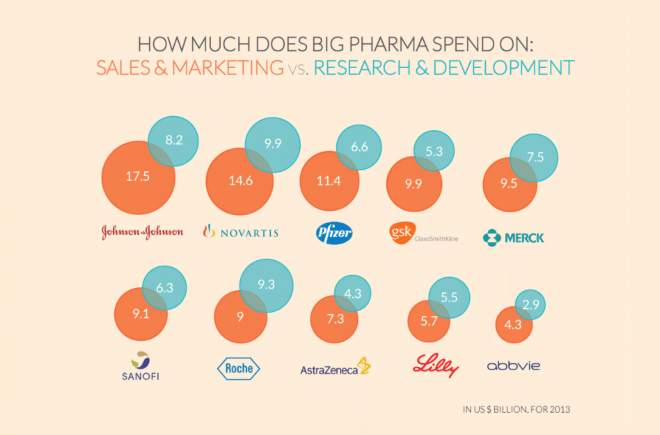
 Welcome to a world where Big Pharma spends in excess of $98 billion a year on sales and marketing, as it reserves $65 billion for research and development according to Global Data https://www.globaldata.com/. (Those numbers are from 2013, and maybe higher when considering the rise of social media, mobile marketing and data based promotions.)

 We have the pharmaceutical equivalent of the cola wars, where, instead of an advertising competition between Coca-Cola and PepsiCo, we have a battle between Merck and Pfizer, or a conflict between Bayer and Novartis.

The difference is one of products, not tactics.

Big Pharma now sells a lifestyle, in thirty-second spots, featuring couples of a certain age whose choice of statins – and pills for sexual arousal – evokes images of health and wealth.

The advertisements are an assault against science and an insult to common sense.

Even worse, the commercials depict a world free of the ailments that trouble most Americans.

For, while Big Pharma sells stimulants and anti-depressants with abandon, while doctors scribble and peel prescriptions for Ritalin and Prozac with a mania all their own, the pictures we see – the print and TV portrayals we absorb – are snapshots of happiness.

No one has terminal cancer in this place. No one knows suffering. No one feels the loss of a loved one. No one experiences physical pain or psychological trauma.

Big Pharma broadcasts this perfect world in which there is no war or famine, oppression or brutality – just one vast and ecumenical holding company, for whom all men will work to serve a common profit, in which all men will hold a share of stock, all necessities provided, all anxieties tranquilized, all boredom amused.

This situation will continue – and we will continue to pay the price, in dollars and lives – unless we stop Big Pharma from advertising.  The United States and New Zealand are the only two countries where direct-to-consumer advertising of prescription drugs is legal. 

This proposal is neither an attack against free speech, nor a violation of the First Amendment, because corporations are not people.

Personhood is a legal fiction, in comparison to the rights we enjoy as citizens.

Put another way, the Founding Fathers did not pledge their lives, their fortunes and their sacred honor so a multinational company could inundate Americans with slogans, jingles and catchphrases.

Now is the time to reform healthcare by repealing these advertisements.

Now is the time for courage, because this effort will be long and difficult.

With the right to do right, we will prevail.


Elizabeth Rice Grossman


An Advertisement Against Advertising

Why Can’t We All Get Along?

Civility is the essence of debate and discussion.

And yet, our country is on the brink of moral collapse – we continue to sink into an abyss of war like words and militant actions – because of the refusal by some to separate opinions from facts, and disagreement from a disagreeable personality; because of the rejection of manners, in favor of a deranged sort of missionary zeal; because of the reversal of respect, by and to our fellow Americans, since both sides renounce compromise as a sign of capitulation and cooperation as treason; because one camp thinks it should fear negotiation, while the other believes those who negotiate only do so out of fear.

Welcome to the state of modern discourse, in which the masses and the media are in permanent conflict.

Welcome to the Disunited States of America, where almost everything is a matter of red states versus blue states.

Welcome to a civil war, where one group reduces governance to a catchphrase and the other tries to have its cause catch fire by starting fires – by setting Berkeley, California, ablaze.

How can this nation survive half-blind and fully deaf?

Unable to listen to criticism, and unwilling to see the flaws of their leaders, these individuals view dissent as a form of destruction.

When you apply that attitude to the classroom or the living room, when you transfer that ideology to a dormitory or a dining room, when you surround yourself with the champions of hatred, do not expect there to be an atmosphere of humility.

Do not expect the impolitic to be polite, the belligerent to be beneficent, and the revolting to be warm and receptive.

Therein lies the point: We can have all the rights our constitution promises – we should have all the rights our constitution guarantees – but none of it means anything if we will not acknowledge the rights that precede the existence of that document.

I write about those unalienable rights of Life, Liberty and the pursuit of Happiness.

For we need not worry about an allegedly fascist government, when we already have partisans who act like fascists – from those who seek to criminalize speech to those who commit crimes in the name of speech, from those who enforce conformity among our colleges and universities to those who try to sow chaos and violence in our cities and streets.

Let us find a way forward by remembering this passage – so representative of its time, and so timeless in its relevance to our time – from President Kennedy’s inaugural address from over a half-century ago:

“So let us begin anew – remembering on both sides that civility is not a sign of weakness, and sincerity is always subject to proof. Let us never negotiate out of fear. But let us never fear to negotiate.

“Let both sides explore what problems unite us instead of belaboring those problems which divide us.

To paraphrase another president, Abraham Lincoln, it is our responsibility to nobly save – or intentionally lose – the last best hope on earth.


Elizabeth Rice Grossman

Kailua, HI


Why Can’t We All Get Along?

Fact or Fiction: Life in the Age of Fake News


Fact or Fiction: Life in the Age of Fake News


In the aftermath of a bitter election, and upon the inauguration of a new president, a challenge confronts the media: How can this institution, from print and electronic journalism to radio and TV reportage, regain the trust of the public when there is a flood of fake news and inappropriate editorializing?

We live in the era of the tweet, by and of the face of this medium, President-elect Donald Trump. We live in a country, where the soon-to-be 45th President of the United States has a record of disputing – and many of his acolytes continue to question – the citizenship of the 44th President of the United States. We live in a world of our own facts and opinions, where no amount of evidence will convince the unbeliever, no amount of proof will persuade the skeptic and no amount of truth will convert the cynic.Worsening this situation is the news anchor, who segues from introducing a story to rendering judgment on the characters within that story. Thus do we desecrate the integrity of Edward R. Murrow or the independence of Eric Sevareid or the individualism of Douglas Edwards, or the prestige of Chet Huntley and David Brinkley, or the care of Walter Cronkite, thereby bringing us to this sad state of affairs.

How can we trust the news, when we have good reason to disbelieve so much of it? For, while rumors and innuendo will always find an audience, and while there will a constant craving for gossip and hearsay, our country cannot survive – learning cannot exist – without sources beyond reproach.

We need, in other words, newspapers and magazines – we need publishers and TV station owners – to operate as a public trust, like a utility company: Reliable and free of partisanship, because there is neither a Republican nor a Democratic way to deliver electricity, for example, in which users get what they want without interference, delay or some hidden agenda.

These individuals must be stewards of the news, treating their stake in this business as more than the pursuit of quarterly profits and an attempt to pacify a board of directors. If these executives want to attract readers – and sell more papers by getting more subscribers – then they must accept that they are the unacknowledged legislators of this society.

That term is about the ability of writers – journalists, novelists and even poets – to appeal to the conscience of the country, to be a catalyst for change by compelling the agents of change – our elected officials, from the nation’s state houses to Congress and the White House – to enact positive change.

That event cannot happen without nonpartisan information, as straightforward and free of bias as data about science or medicine.

We must ensure that that event will happen because, when we take a quick look at the world, when we see the Middle East overrun by civil war and mass murder, when we see Europe facing crises of the heart and home, when we see refugees seeking asylum in Germany and terrorists staging attacks in France, when we see North Korea expanding its nuclear arsenal and China increasing its navy, when we see all these things – and more – we need unity not about the proposed solutions to these problems, but agreement that these problem do in fact exist.

We must defeat the circulation of fake news before it defeats us.

Now is the time for good reporters to file good stories, free of prejudice or personal politics.

Now is the time for truth to triumph.

Now is the time to make journalism great again.


Elizabeth Rice Grossman

Kailua, HI

Fact or Fiction: Life in the Age of Fake News

Your Vote Counts

every-vote-counts

The ‘Inconvenient Season’: Why Voter Apathy Is Inexcusable. Your Vote Counts.


Allow me this one complaint: Voter apathy is the great enemy of our republic.

The absence of long lines at polling places throughout the country does not bespeak contentment with our government, nor does it confirm the stability of our frayed democracy.

It indicates an irony so deep and dangerous it defies imagination to think – to know – that, amidst conquests in the Middle East and the religious slaughter of our fellow human beings, and elsewhere, in the avaricious actions of a Soviet-communist-turned-Russian-nationalist foe, in so many foreign capitals where we erroneously celebrate that there are no red states or blue states, there is just one knee-deep crimson river of blood.

How can a citizen be apathetic about such things?

Why would a person stay home, or, in the obscene reduction of politics into the terminology of a sporting event, “sit this one out” while the legislators who will exercise power in our name will do so with anything but apathy?

The fault for this crisis rests with the mistaken belief that your vote does not matter. Not true.

One vote – a mere handful of votes – encapsulates the outcome of the 2000 presidential election.

One vote is the reason why this nation was spared the removal of the 17th President of the United States, Andrew Johnson, in 1868.

One vote is the difference between the Supreme Court’s defense of gay marriage versus its erasure from the Union, dissolving millions of unions, and dislodging parents from children and tearing families asunder.

Your vote puts the man or woman in office, in Honolulu or Washington, DC, who will either be an agent of liberty or a self-possessed filibuster against the march of freedom.

How is apathy excusable in the face of such inexcusable consequences?

If my words seem too strident, my reply is, I suppose, even more frank: Tough.

For, I know all too well how apathy can be the seedling for imperial impulses, from which democracy disintegrates into tyranny and the long shadow of tanks darkens the streets in Beijing and Budapest.

Apathy abets these crimes because we choose not to know what we conveniently choose not to see.

We give silent license to the unelected and the unaccountable to do the unthinkable: Despoil our Constitution, and shred the Bill of Rights into razor-thin streamers of confetti.

On November 8, 2016, we have a chance to reclaim our rights.

We have a duty to abandon the false comfort of apathy.

We have a responsibility to vote.


Elizabeth Rice Grossman

Kailua, HI


Your Vote Counts

A Little Something on the Side


Long before JFK and Clinton, there was a long tradition of extracurricular activities.

Dwight Eisenhower had Kay Summersby; Warren Harding had Carie Phillips among others. Woodrow Wilson had Mary Peck, and James Garfield (a total weirdo when it came to sex) had Rancie Sellect and an 18-year old reporter named Lucia Calhoun. George H.W Bush allegedly had Jennifer Fitzgerald, a political aide and Lyndon Johnson had an affair with Alice Glass, the wife of one of his major supporters. Lyndon Johnson once bragged that he’d “had more women by accident that Kennedy ever had on purpose.” Grover Cleveland, one of only three presidents to get married while in office, wed his ward from the age of nine. He was a really terrible person to another woman who became pregnant with his son. It is a story of abuse of power by a man who was notoriously bad with women. Makes you wonder.   George Washington married Martha in 1759, and prior to marriage and during their engagement, it was alleged that he was in love with an old flame, Sally Fairfax.   There is not credible evidence that he was unfaithful after their marriage. And then there is James Buchanan who’s fiancé died a few days after their engagement ended. Local gossip speculated that she had been devastated to discover that he was seeing other “people”. For 23 years Buchanan lived with Senator William King, sharing a house and the same bed. Some historians suggest that the relationship was as good a reason to call Buchanan our first gay president. FDR’s infidelity is fairly well known at this point. The relationship with Eleanor has been described as “complicated”.  FDR’s affair with Lucy Mercer (Eleanor’s social secretary…oh dear) was well known.  I wonder if FDR could have been elected in the era of social media?  Most likely not.

The point is, who cares really? I do not on any level. It’s none of my business.

Hillary Clinton’s email…I don’t care. I do care about her statement having “both a public and a private position” on politically contentious issues. But not really as I’m not surprised by any of the rhetoric.  Trump’s taxes, I do not care.  Trump’s wife’s past, I do not care.   Bill’s affairs, clearly I do not care.   In fact, I’m not surprised about any of the allegations…I just do not care.   What I do care about are issues. The Fourth Estate is not doing their job. We’ve seen very little specific proposals on immigration reform, tax reform, economic programs, education, student loans, election reform, etc. They spend hundreds of millions to get elected. And one will prevail, and we have no idea what they intend to accomplish and how.  We deserve to know.


Elizabeth Rice Grossman

8 October 2016


A Little Something on the Side

The Presidential Election 2016

The presidential election of 2016 will be remembered as a contrast between bile versus bombast, between an anointed member of The Establishment and a demagogue of reality TV; between a candidate who would struggle to defeat an otherwise obscure socialist and now confronts a thrice-bankrupted casino operator with a record of failed marriages and forsaken creditors.

In this choice between Hillary Clinton and Donald Trump we have attacks and counterattacks, as well as name-calling, lies, rumors and innuendo. We have everything but a genuine contest of ideas, leaving us – leaving America – no more ready to be great again than able to solve our most urgent problems.

Let it also be said that America is good, in perpetual pursuit of greatness. We continue to strive to form a more perfect Union, spending blood and treasure to secure those rights – for all Americans – that are as old as the Scriptures and as clear as the American Constitution. That is a promise proclaimed by President Kennedy during a moral crisis of whether this country could endure half-slave or half-free. Those are words for us to remember because they are an expression of substance, compared to this year of incompetence and ineptitude.

This is the election of forgotten issues and neglected duties, in exchange for the diversion of Twitter and the partisanship of party hacks.

Where, may I ask, are the speeches about political reform and education policy? Where are the lengthy debates – impassioned but civil, intelligent yet free of invective – where Clinton and Trump discuss the future of the Middle East? Where are their remarks, noteworthy for their detail but nuanced by their transcendence of party loyalty, regarding the intricacies of trade, tariffs and taxes?

Thus, we have a good nation without the answers to questions of great importance. We face grave matters of war and peace without clarity about the strength of our alliances and the trust of our allies. We face yet another election full of sound and fury signifying nothing, while we descend into madness about laughter concerning Trump’s hair and conspiracy theories involving Clinton’s server.

As painful as these facts are, and as difficult as they are to read, I refuse to abandon the promise of America – that we get the leaders we deserve; and come the next election, with hindsight and wisdom, we will not nominate – and we will not accept – a ballot that gives us more of the same.

I look at the world as it is, and as it could be, for good or ill. For if we are to be the last best hope of earth, if we are to be the Land of Lincoln (and of Washington, Jefferson and Roosevelt, too), then we need to appeal to the better angels of our nature.

We need candidates of courage and sacrifice. We need nominees of insight and legitimacy. We need a president of the people, who is ready to do the people’s business.

In that spirit of malice toward none, and charity for all, let 2016 be the end of “the lesser of two evil” candidates and mendacious campaigns.


Elizabeth Rice Grossman

23 September 2016


The Presidential Election 2016

Trump Card: The Rise of Populist Anger

donald-trump022

Trump Card: The Rise of Populist Anger


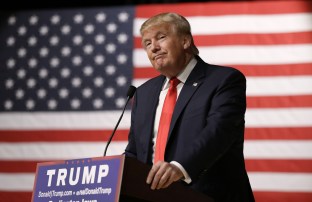
Do not treat Donald Trump like a laughingstock: He represents many factors – he is a vessel rather than the exclusive voice of discontentment – among an electorate angered by upheaval, at home and abroad.

Trump’s rhetoric, distinctive and inauthentic though it may be, sounds real to tens of millions of Americans who look at an economy that rejects them, a culture that mocks them and a governing elite that ignores them.

They hear Trump’s attacks against political correctness – and they cheer, stomping their feet and bruising their hands with thunderous applause because they know, and The Donald knows they know, that they are sick of having to be polite at the expense of being right; that they will no longer tolerate the sort of false tolerance that refuses to call Islamic terror what it is; that continues to destroy free speech on the country’s college campuses; and that squeezes the middle class while it creates an ever-widening chasm between the rich and poor.

Trump is merely a symptom of a much more dangerous disease. For, if we do nothing to reverse these assaults against our commonwealth – and our common sense – and if we remain silent amidst a jobless recovery and the false hopes of President Obama, we will be the United States of America in name only. Trump knows this, and he feasts upon this knowledge, so he can marshal his followers – both online and in-person – to do what few candidates can even imagine, to vote in enormous numbers for this populist billionaire.

Those who dismiss Trump miss the point: The nation is in the midst of an economic and cultural civil war, a conflict that will determine the strength if not the survival of the Union; a battle between the dispossessed versus the One Percent; a secular crusade versus a religious jihad, where the former stands for women’s rights and human rights and the latter seeks to conquer and enslave all of Europe and the Middle East.

Trump sees the world without blinders. And, though his economic proposals may be improbable or impossible, he speaks to voters disgusted by Washington decadence and without contempt for their customs or their cherished traditions.

He sees an invasion, both physical and philosophical – he sees legions of illegal immigrants, some of them violent criminals, and he sees an enemy with an unwavering dedication to killing us, be it in the streets of Paris or the suburbs of San Bernardino, and he demands action.

How many more victories must Trump win, until we recognize these problems? How many more rallies must he stage, until we accept the gravity of these challenges? How long until he wins the White House because we are contemptuous of his candidacy?

The country is in serious trouble.

November 8th is Election Day.


Elizabeth Rice Grossman


Trump Card: The Rise of Populist Anger